
Refreshing a restaurant is like updating old recipes: Some just need a dash of salt, while others require the addition of entirely new ingredients. Regardless of the scope, periodic updating of your environment is not only important, it can be vital to success in the ever-changing food service industry.
There are numerous reasons to redesign an establishment, with equal benefits for the owner and the customers. Fundamentally, refreshing a restaurant has been shown to increase both short- and long-term sales due to a number of outcomes that accompany a renovation.
Updating provides a way to stay relevant to guests. You are competing with new concepts being established on every corner. Today, it’s important to create a place with a cohesive and appropriate atmosphere that allows diners to escape the chaos of their daily lives. Letting your guests know that you’re staying ahead of the game can boost customer volume and appeal to a broader audience.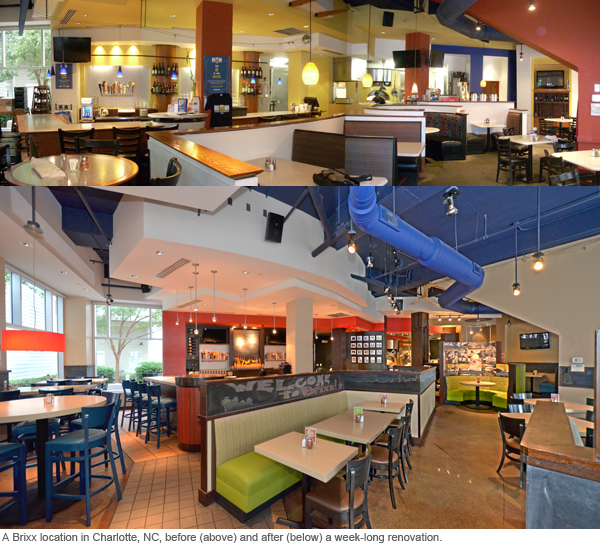
Making specific and deliberate changes enhances and reinforces the restaurant’s unique brand identity. Additionally, these alterations fill the space with a newfound life and zest, allowing customers to both notice and appreciate the redone space. This effectively communicates a sense of your business’ quality and commitment to its patrons.
Plan your work and work your plan
First and foremost, it’s critical to develop a game plan. A strategic process includes identifying factors, such as restrictions, current issues and branding opportunities, that will influence your overall reconstruction.
Parameters to take into account are falling or stagnant comparable-store sales, increased competition in the area and the amount of time remaining in the lease. It is also important to evaluate your relevance to customers and how the business is aligning with market patterns. After assessing these limitations, current maintenance and code violations should be taken into account. An enforcement of previously overlooked violations is a typical result of a lagging economy. A sanitary environment will lower the risk of food hazards, improve the health inspection rating, and leave a positive impression on the diners.
Operational and customer flow patterns should also be reevaluated, since improvements upon floor plan and layout can maximize efficiency and transform the working environment of a space. In addition, strengthening the concept identity through the use of branded elements personalizes the atmosphere in a restaurant.
Lastly, it is vital to reconcile your overall budget before finalizing the plan. Sometimes a space may present a significant amount of potential, but will require sufficient capital to cover all the expenses. Compromise is essential; striking a balance between cost and priorities will lead to an ideal outcome.
Three Rs of updating
 The terms retrofit, remodel and renovation may represent foreign concepts to restaurateurs. However, each plan consists of different aspects. Choosing the appropriate path is as important as the update itself.
A retrofit is the most noninvasive strategy. You can schedule it during off hours to avoid closing your restaurant or compromising the customer experience. This plan primarily includes redoing the graphics, finishes, décor elements and paint colors. It may also consist of minor changes to the millwork or furniture. In general, none of this work requires a permit, but you should consult your local jurisdiction.
A remodel builds upon the idea of a retrofit, while also addressing repair and maintenance issues. This brings about the need for a short restaurant closure to address small code violations. From booth fabrics and flooring to seating rearrangements and partitioning, the changes are more extensive in this approach.
Finally, a renovation includes all the procedures in a remodel, but it is the most complete and drastic process. The invasive work will require closure for a minimum of three weeks to allow for demolition, rebuilding and possible new construction. While extensive finish changes are included, a renovation will also address all code violations in the establishment.
Advance planning and prioritizing will enhance positive results; the key is to develop an overall plan before beginning. If you have limited capital, you might consider completing the work in phases. Scheduling multiple retrofits over a span of time allows the updates to build on each other, and ultimately it can produce the cumulative effects of a remodel. Lost business is another consideration. The best time to do the work is during historically slow times. Additionally, establishing a strong relationship between the contractor, architect and restaurant owner will inevitably produce innovative solutions and reduce overall costs.
Whether it includes minor paint touch-ups or complete reconstruction, updating an existing restaurant can improve the brand identity, encourage new customers and prepare your business for the future — not to mention increase sales along the way!
Rachel Wasylyk is the marketing coordinator for Tobin Starr + Partners, which helps clients achieve creative, relevant and insightful architecture and design solutions. E-mail her at [email protected].


