
Bar-inspired flavor profiles, real ingredients, “snackification” and automation: Those are just a few of the trends New York City-based consultants Baum+Whiteman International forecast to be big in 2013. The firm, which creates high-profile restaurants for clients around the world, collects macro hospitality trends each fall and issues its predictions. Here’s what we can expect:
1. Bars: Where the flavor action is
Looking for future flavors? Keep a keen eye on artisan boozeries. Ambitious bartenders, whose numbers are growing exponentially, are infusing vodka, gin and (especially) rum with mango, kiwi and other housemade exotica, like dried fruit, as they stretch the notion of handcrafted cocktails. Talde in Brooklyn, N.Y., lines its bar with beakers of honey syrup, grenadine, vanilla syrup, mint syrup, Chinese five spice syrup, citrus bitters and maple bitters, all housemade. At “Farm-to-Bar” Copa d’Oro in Los Angeles, fruits, herbs and vegetables come fresh from the Santa Monica Farmer's Market. You tell the bartender alcoholically what’s on your mind and he fashions a drink from these ingredients. It’s happening across the country.
Flavor researchers and chefs should refocus on the bar: Cocktails of pureed and muddled melons, syrups of lemongrass, rosemary, pomegranate, cinnamon, cardamom and ginger, among other esoterica; flavored vinegars going into old fashioned shrubs, smoked ice cubes, yuzu bitters, chocolate-chile bitters, sangria variations no one’s heard of in Spain.
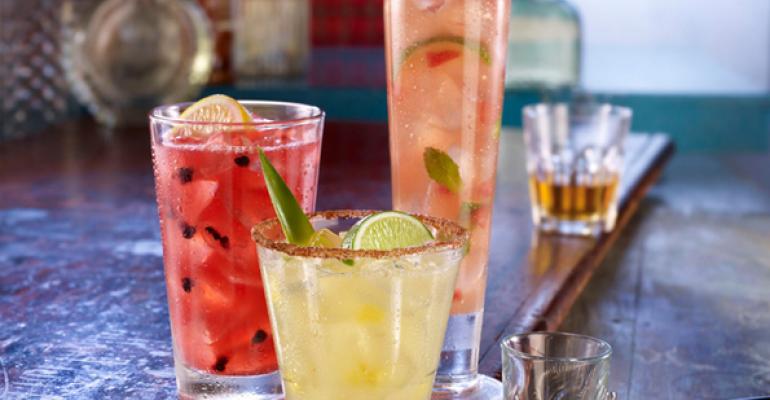
Restaurant and hotel chains, straining to step away from bottled and powdered shortcuts, are playing catch-up. But training hundreds of bartenders can be a killer. To raise their competitive profiles, they’re emphasizing Latin accents. A good example: T.G.I. Friday’s Tiki Torch, a mashup of tequila, muddled pineapple, triple sec, lime and chipotle-pineapple syrup.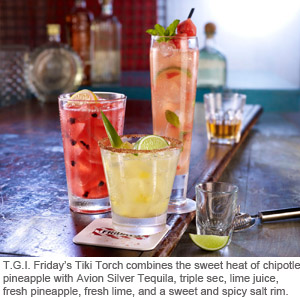 Boozy soda fountain favorites for grownups are on-trend: Floats, shakes, parfaits and smoothies laced with bourbon, peppermint rum, aquavit, Benedictine or chartreuse along with flavored syrups. And better burger chains, obsessed with differentiation, are now pushing alcohol-laced shakes.
You need to know about “fatwashing.”
Because handcrafting artisan cocktails is slow and labor-intensive, we’re seeing pre-made barrel-aged cocktails. Small batches are stored for weeks and even months in old bourbon, rum or sherry barrels where they mellow and absorb butterscotch top notes inherent in the wood. State laws prohibiting premixing of different boozes are being relaxed or ignored, so this trend is spreading fast, with good reason. A five- or six-liter batch of Negronis might barrel-age for a few weeks, then sell out in a day or two. Avant garde bars are batch-carbonating premade cocktails and serving them in capped bottles.
All this artisan stuff is expensive, and cocktails are regularly crossing the $15 line. By-the glass wines are galloping in price as well. An $8 glass once came from an $8 bottle; now we’re seeing $12 glasses from $10 bottles. And local craft beers, traditionally poured in pints, now come in 14- or 12-ounce glasses.
Hotels and hot restaurants around the country are hiring itinerant cocktail consultants. These paid guns stay on top of local small-batch distilleries and crank up their imaginations. A London bar has been selling a Meataquita, a concoction of chorizo-infused tequila, vegetable juice, balsamic vinegar, smoked salt, pepper and port.
Coming soon to you:
• Bars specializing in brown spirits, especially bourbon and new-old ryes.
• Mysterious vermouths.
• High-proof spirits (think 50 percent alcohol and up) and artisan beers with 8 percent to 12 percent alcohol. Not just because people want to get tanked faster, but because patrons are demanding stronger flavor identities.
• Beer-based cocktails.
• Juices “enhanced” with a bit of booze, so you simultaneously get your antioxidants and a bit sloshy.
2. Soft drinks are bubbling
For quick-service restaurants, beverage sales are a big bright spot with growing numbers of snack-time beverage-only sales. The three big gorillas — McDonald’s, Dunkin’ Donuts and Starbucks — slug it out with every beverage concoction they can devise to slake thirsts. Starbucks has added a line of coffee-spiked energy drinks, its acquisition and planned chain of Evolution Fresh Juice bars (with premium prices and a real menu) will compete with Jamba Juice and the company’s new Tazo Tea salons are taking on Teavana. Jamba Juice is pushing recently acquired Talbott Teas into its smoothies and has added fresh-squeezed options to its high-sugar lineup. Dairy Queen is hawking Orange Julius-branded soft drinks. Red Mango is adding frozen coffee smoothies. And frozen yogurt shakes are taking off everywhere.
Upscale restaurants, pushing for differentiation, are making their own artisan sodas using fresh and local ingredients (especially at their bars). And several bottlers of flavored waters are adding real juice to their products.
Behind all this stirring: Consumers are trading in colas for “fresh” beverages or fruit-flavored carbonates and smoothies with a health halo. New York’s coming ban on monster-size sweetened drinks raises awareness, too. Pepsi sees flavored carbonated drinks outselling colas by 2015. Every fast feeder needs a blended fruit beverage, preferably with healthy herbs and berries. Hibiscus, pomegranate, lemongrass and basil will pop up in mass-market beverages. Expect fruit-flavored iced teas to rise at quick-service and fast-casual restaurants.
3. Everyone still wants to be Chipotle
 We’re seeing fast-casual service models applied to pizza, fish, chicken, Greek, noodles, Asian (Chipotle’s own ShopHouse Southeast Asian Kitchen), hot dogs and tacos. Want to know where it all began? Get yourself to a San Francisco taqueria.
Because fast-casual concepts seem fresh and new, they’re entry points to sample new ethnic cuisines, especially for millennials. Customizable sushi, Indian-inflected wraps, and a banh mi version of Subway would be examples.
Look for more established brands to jump into the market. Red Robin is playing with the fast-casual Burger Works; Pizza Inn spawned Pie 5; JR’s Burger Grill descended from Johnny Rocket’s; a second Deckers and a second Blaze Modern BBQ are cobranded with White Castle buildings and mature brands like Denny’s, Sbarro, Shoney’s and IHOP are experimenting.
Everyone understands the system: Interactive service with food made in front of you; customizable upscale options; bolder flavors; distinctive, contemporary décor; prices about half-again as much as fast food and slightly slower service in exchange for better quality.
But the system alone isn’t enough. Fast-casual concepts need to represent values as well as value. What should consumers know about your food? What do you mean by “transparency?” Where does your bacon come from? What’s your position on sustainability, on recycling, carbon footprint, food miles, genetic modification, gay marriage?
4. Fast food strikes back; more “dumbbell-ing”
At the bottom of the price chain, fast-feeders aren’t taking robust fast-casual competition with a grain of salt. Menu boards are sprouting higher-priced options. Burger chains, smitten by the “gourmet” boom, are adding higher-priced items while maintaining their 99-cent or $1 leaders. Watch for gilded burgers (guacamole, pineapple, mushrooms, crispy onions, but don’t look for goat cheese), pepped-up sauces, ethnic touches, lots of fancier buns and a bit more customization. The dangers: Fast feeders might be edging into fast-casual average checks without delivering a fast-casual experience, and too much trading up leaves a hole at the bottom of the market for someone to fill.
Minis have expanded. If fits your car’s cup-holder, if you can eat it with one hand — or better yet, two fingers — or if you can dip it, then it’s being tested in chains’ R&D kitchens. We’re seeing sausage bites, cake pops, chicken dippers, rolled sandwiches, teeny cinnamon buns, mini shakes and more. Dashboard dining has turned into all-day snacking, a boon to quick-service operators. Expect more fast-casual concepts to add drive-through windows to capture some of this business.)
Image-building is critical to consumer acceptance for upscale items. So language is changing. Domino’s pan pizza is “hand made” (take that, Pizza Hut!). Arby’s wants you to think that in-store meat slicing means the food is “fresh.” “Real” (as in real fruit) will be an overused word.
Taco Bell’s Chipotle-like menu graft-on rang a bell, so look for similar imitation among other fast feeders. Interesting factoid: At Jack in Box more than one in six checks is over $7, while $3 or less accounts for slightly less than one in four checks … so you can see the attraction of going while keeping bargain prices, too. It’s called “dumbbell-ing” the menu.
5. The snackification of the U.S.
We’re eating less at every meal, but more than making up for it with endless snacking. And our collectively expanding waistlines prove it. Snacks account for one in five “eating occasions.” Multiple snacks now qualify as a fourth meal. Even the traditional three are degenerating into nibbles and bits.
Snacks are becoming increasingly sophisticated. Glorified miniburgers, wraps with exotic fillings, upscale dips and the like are building off-hours bar traffic. Lots more minis are showing up at fast food chains, adding impulse revenue to between-meal shoulder.
6. Be careful what you promise
Natural. Organic. Artisanal. Local. Claims like these are under intense scrutiny as bloggers, journalists, nutritionists and, of course, lawyers holler “Your pants are on fire!” Keep your eyes on major suits (among others) over genetically modified ingredients conflicting with “natural” claims and suits against several yogurt makers over whether their “Greek” product is the real thing. Nutella agreed to overhaul its labels earlier this year. Jamba Juice has faced a suit over its ingredients, and actions against Applebee’s and Brinker have targeted calorie and fat content on their menu labels. Expect more as menu labeling laws kick in across the country.
7. Bundling gets bigger
Fast food meal bundles are nothing new. But since the recession, bundles are getting more play at casual dining chains: Chili’s and Golden Corral’s 2-for-$20, periodic bargain dinners-for-two at Red Lobster and T.G.I. Friday’s, Olive Garden’s 2-for-$25 this summer, and lately its buy dinner and get a free entrée to take home. The Palm in September had a three-course dinner for $39.95, including an eight-ounce filet. Morton’s introduced a $29.95 lunch package. Outback has been offering four courses for $15. The objective: fill seats at any cost, and stem the tide of people trading down.
At the other end of the spectrum, there’s an opposite strategy at hot upscale independents. Instead of discounting, they’re charging oodles of money! Whole animal or whole bird dinners are expanding, triggered by successful nose-to-tail dinners across the country and, in equal part, by large format meals like New York’s Momofuku $200 Korean bo ssäm family-style meals of a dozen oysters, a whole roasted pork shoulder, bbq sauce, kimchee and lettuce in which to wrap the meat. It’s available at lunch or only before or after peak dinner hours.
At Daniel Boulud’s dbgb this past summer $495 got you an entire pig for up to eight people plus head cheese as a starter, a mountain of side dishes and baked Alaska.
Grace Restaurant in Portland, ME, has a “whole beast” lamb dinner for six to eight people at $65 a head, including harissa-spiked lamb tartare, cured lamb “bresaola,” rigatoni with smoked lamb shoulder, and leg of lamb stuffed with pine nuts and corn. Like many such feasts, it requires 72 hours’ notice.
Mozza, in Los Angeles, keeps its “scuola” event venue busy with specialty dinners including a whole hog multicourse extravaganza of various body parts served family style for up to 30.
Wong, in New York, does it with duck: duck in lettuce wraps, duck buns, duck meatballs, whole duck two ways, duck broth and duck fat ice cream with plums. The shebang is $65 per person for four to eight on 48 hours’ notice.
Although fairly timid (rarely do you get tongues, kidneys, livers and tails) these “dining adventures” are immensely profitable. Chefs know exactly how much to purchase for a pre-ordered table, the kitchen cooks a banquet-style meal, tables get filled at off-hours, waiters don’t juggle complicated orders and the festive event prompts diners to vastly over-order cocktails and wines. Diners, meanwhile, revel in theatricality and in a carnivore’s delight at digging into an animal, often getting finger-sucking greasy.
8. Awesome automation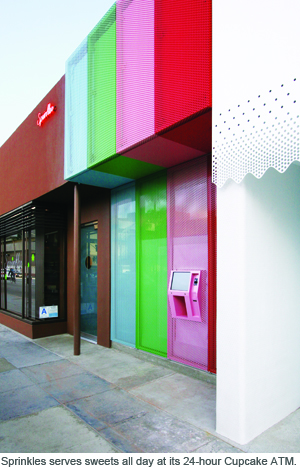 Sprinkles, the L.A. cupcake chain, made headlines with its pink 24-hour Cupcake ATM that purportedly sells 1,000 pieces daily to people seeking an after-hours sugar fix.
Meanwhile, McDonald’s is importing its touchscreen order-and-pay kiosks from Europe to the U.S. to speed service and shorten lines The chain also plans back-of-house upgrades to handle increased orders.
These are evidence of industry-wide moves to accelerate getting food into customers’ hands. Sprinkle’s creative cupcake vending is no threat to, a Panera Bread. But the machines can help accelerate service and generate incremental sales. More examples:
• A Lay’s machine in Argentina churns out warm, salted chips from real potatoes and sells them by the bag.
• Seattle’s Best Coffee brands machines in grocery and convenience stores, so you’re not forced to buy anonymous swill on the go since this one starts the process with whole beans and vends coffee, mocha and lattes.
• A butcher in Spain has a 24-hour vending machine for prepared meals, sausages, steaks and meatballs; in-store customers can use it during business hours, bypassing salesclerks.
• Jamba Juice launched JambaGO, vending its products in nontraditional locations like schools, entertainment complexes and convenience stores.
• In France, a 24-hour machine sells freshly baked baguettes.
• In Korea, a Coca-Cola Machine has an interactive dance feature. Users imitate dance steps shown on a large screen and the machine rewards them with bottles of soda; in Singapore, you hug a vending machine lovingly and out comes some Coke.
The Japanese buy everything from underwear to lobster from vending machines, but we’re just scratching the surface. Machines at U.S. airports vend paperbacks, sunglasses and electronic gadgetry. Why not more food?
9. Breads and greens
Many restaurants won’t provide bread unless guests request it. And increasingly, they’re charging for it. Look for more elaborate breads and rolls as restaurants increasingly do in-house baking. The practice can save costs and ramp up distinctiveness, especially with sandwiches, emphasizing an “artisan” at work.
Less-heard-of greens are proliferating as well. Meanwhile, seaweed is showing up on more than just sushi. It’s in bread, flavored salt, crackers, breakfast cereals and butter and toasted and sprinkled on fries, fish and pasta. Kale has trickled down to mass-market feeders. The likes of beet greens, chard, turnip greens and mustard greens, rejected only five years ago, are finding favor.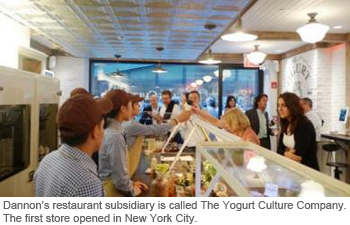 10. Suppliers are getting into the game
Blame it, perhaps, on the wildly successful Apple Stores. More food suppliers and manufacturers are launching their own restaurant startups. Their aim: To raise their brands’ visibility and build powerful appeals to consumers.
Take the latest “culture wars”: Dannon and Chobani have opened flagship yogurt bars in New York City, planting their flags where thousands of customers pass by. Dannon is hawking a choice of traditional and Greek-style yogurt, a retail segment that’s doubled in five years with no sign of slowing. Chobani, the largest US purveyor of its kind, sells only Greek yogurt curated by “yogurt masters.” Both stress “fresh” yogurt, the tangy mainstay of all those Korean upstarts.
Barilla is launching branded pasta restaurants next year to enhance the company’s pasta products in supermarkets and, presumably, among restaurant food buyers and customers. A competitive manufacturer, Pastificio Rana, is opening a long-delayed fresh pasta restaurant in New York’s Chelsea market, the first of a chain.
Ghirardelli Chocolate, on the prowl for high-traffic venues, opened a soda fountain/chocolate shop at Disney California Adventure. Next up: locations in San Francisco’s Palace Hotel and Harrah’s Carnaval Court in Las Vegas. In Virginia, Smithfield Foods opened a pork-centric restaurant, Taste of Smithfield, combined with a specialty retail store. It’s designed to enhance the brand’s visibility by attracting large number of tourists.
And don’t forget beer. Anheuser Busch-InBev is joining other global breweries at airports with a chain of Belgian Beer Cafes serving their own brands (Stella Artois, Hoegaarden, Leffe) and modest amounts of food.
Some of these are for promotional purposes, but some are actual profit centers operations slated for expansion (Pastificio Rana runs a chain of pasta places in Europe), so one wonders whether more of this stuff could alienate the folks who write restaurants’ purchase orders for food and beverages.
On the other hand, since we’re finding increasing numbers of chain restaurant brands in supermarkets, perhaps this is well-deserved tit-for-tat.
Michael Whiteman is president of Baum+Whiteman. Contact him at [email protected].


